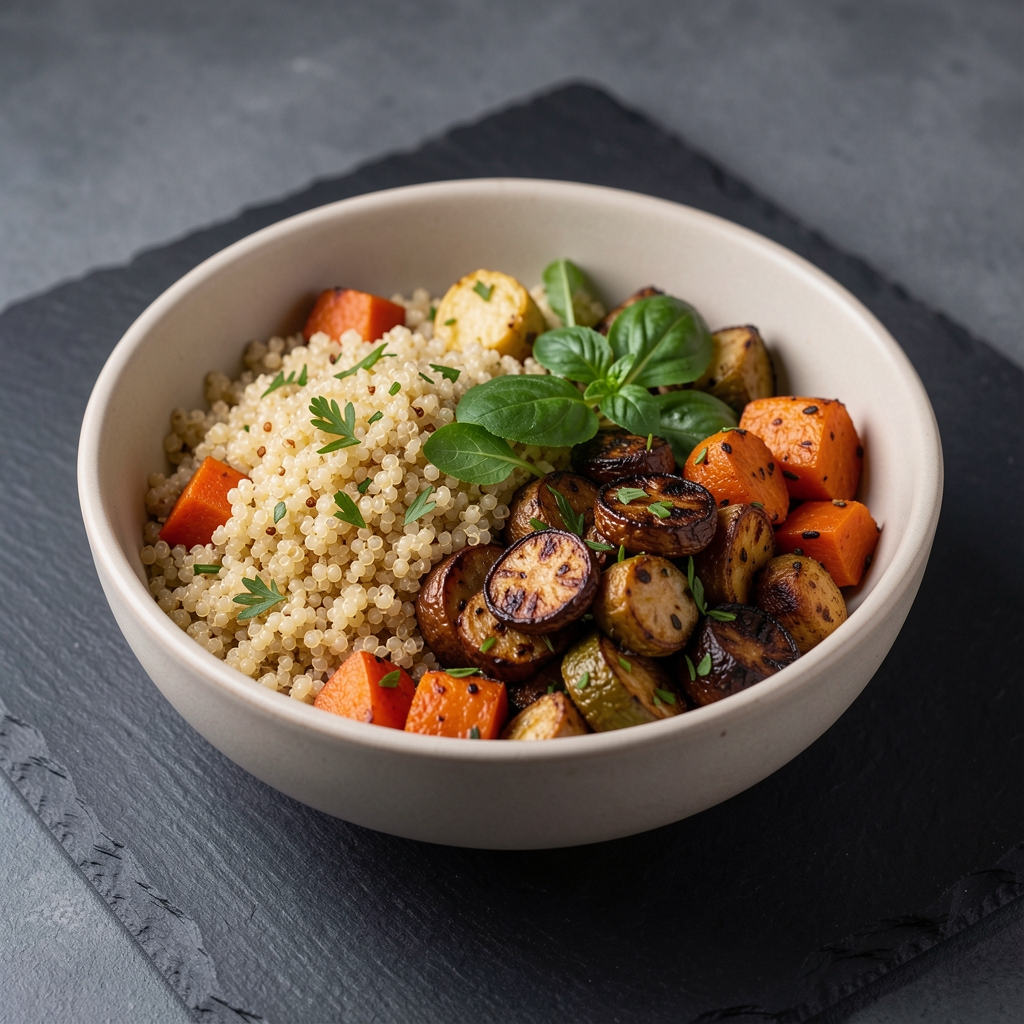
Balanced Meals
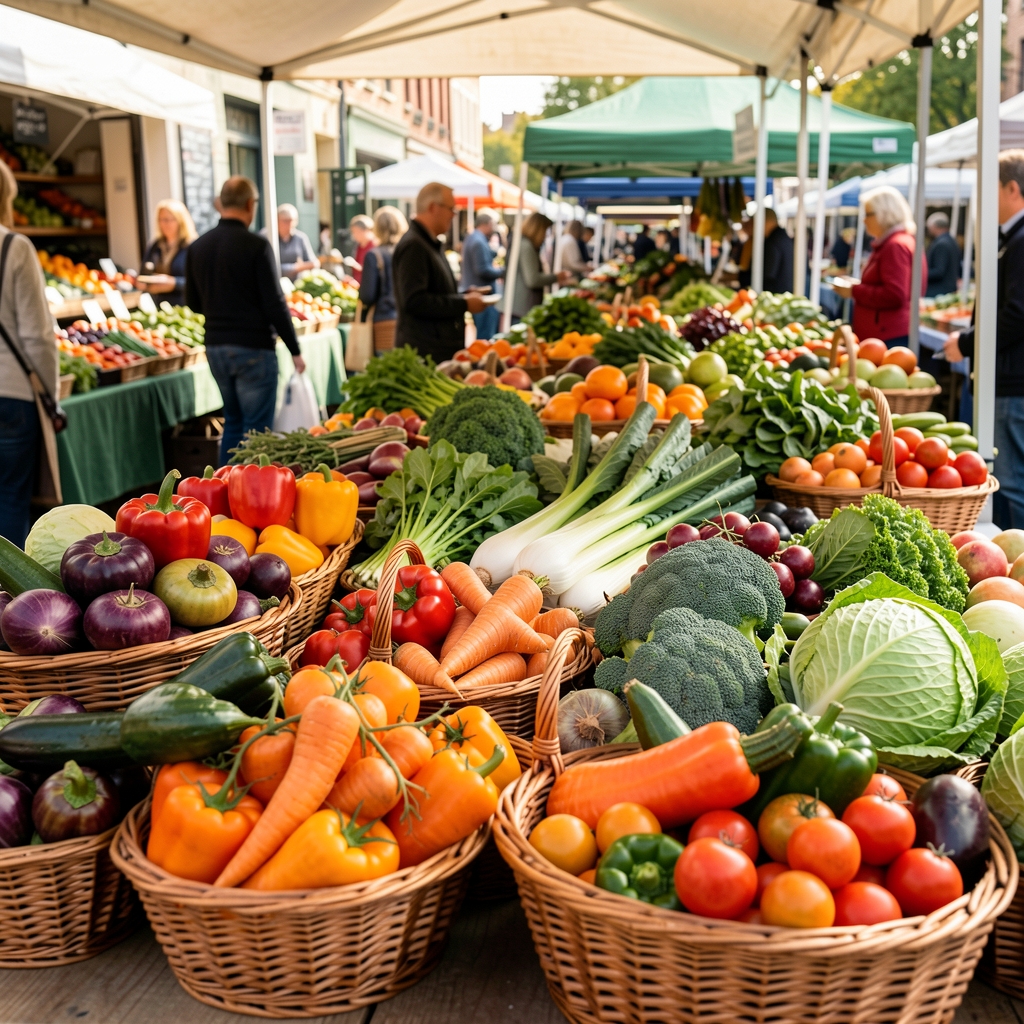
There is a particular kind of attention that a weekly visit to a produce market demands. Not a list-driven urgency, but a slower, more curious engagement with what is simply available. Seasonal eating, at its most practical, is a study in working with what the growing calendar offers rather than against it.
Produce harvested at peak ripeness and eaten within a short window retains a broader range of micronutrients than items transported across continents over several days. This is not a contentious claim. It is a straightforward consequence of how plant biochemistry works: certain water-soluble vitamins degrade with time and exposure to light and oxygen. A spinach leaf cut yesterday morning is a different nutritional object to one that arrived by refrigerated lorry from three thousand miles away.
Published dietary guidelines from nutritional bodies in the United Kingdom have consistently pointed toward increased vegetable and fruit intake as a foundation of balanced meals. What those guidelines rarely specify is provenance or timing. The seasonal angle adds a quiet layer of practical wisdom to an already well-established recommendation: eat more plants, and where possible, eat the ones that are fresh.
Fibre-rich diets, associated in published nutritional research with supportive gut function, tend to feature prominently in seasonal autumn and winter eating — precisely because root vegetables, brassicas, and squashes are in abundant, affordable supply during those months. The alignment is not accidental.
"Working with the season is less a philosophy than a practical stance — a way of letting the calendar do some of the thinking."
Eleanor Whitfield — Orani Almanac
A seasonal approach to meal planning does not require a wholesale reorganisation of the kitchen. It begins with a simple habit: before writing a weekly menu, noting what is currently in season in your region. In the United Kingdom, this changes meaningfully four times a year, with meaningful gradations in between. Spring brings asparagus, purple sprouting broccoli, and early radishes. Summer arrives with courgettes, broad beans, and a brief, brilliant tomato window. Autumn deepens into squash, celeriac, and wild mushrooms. Winter calls for leeks, parsnips, and hearty greens.
Weekly menu writing becomes a different exercise when anchored to this calendar. Instead of choosing dishes and then sourcing ingredients, the process inverts: what is available in abundance shapes what appears on the plate. This inversion has a useful side effect — it naturally encourages variety across the year, something that fixed meal routines rarely achieve.
Portion awareness also shifts subtly in a seasonal kitchen. When the same vegetables appear repeatedly over a few weeks because they are at peak supply, creative engagement with them increases. A celeriac becomes a remoulade, a soup, a gratin. The repetition builds familiarity and, with it, more intuitive portion calibration — less anxiety about quantities, more attention to the textures and flavours that signal satisfaction.
The home kitchen remains the most reliable environment for translating nutritional intention into actual eating. It is also the space where seasonal produce is most usefully engaged: cooking from whole ingredients rather than pre-assembled products allows for direct control over what goes into a meal and in what proportions. This matters practically for calorie awareness — not as a numerical obsession, but as a general orientation toward the composition of a plate.
Gut-friendly recipes that feature fermented accompaniments — a simple yogurt dressing, a side of sauerkraut, a miso-seasoned broth — fit naturally into a seasonal home-cooking practice. These additions require minimal preparation and bring a functional dimension to meals that are already built around fresh, whole ingredients.
Hydration habits, often discussed in isolation from food, sit within the same daily structure. A warm breakfast bowl of porridge with stewed seasonal fruit contributes to morning fluid intake. An evening salad dressed with lemon juice does the same. The approach is integrative rather than supplementary: water-rich foods become a component of a broader hydration strategy rather than a footnote to it.
A sustainable weight approach does not announce itself as such. It is, in practice, an accumulation of small orientations: cooking more often at home, choosing fibre-rich ingredients, attending to portion size without anxiety, moving the body with some regularity. A seasonal eating rhythm, pursued steadily across months, quietly supports all of these orientations.
The energy balance that underlies body composition over time is not served by acute restriction or periodic dramatic change. It is served by what might be called a slow approach: a way of eating that does not require willpower as a daily expenditure because it is, in its architecture, naturally satisfying. Seasonal produce, cooked simply and varied across the year, has a structural advantage here. Its flavours are genuine. Its preparations are often straightforward. Its costs, at peak season, are typically lower. These conditions are not irrelevant to the question of how habits form and whether they hold.
Nutritionist guidance across multiple published frameworks consistently returns to the same underlying model: a varied, plant-forward diet, low in ultra-processed components, sustained over years rather than weeks. Seasonal eating is one coherent, practical expression of that model. It does not require specialist knowledge, expensive equipment, or a particular kind of kitchen. It requires, mostly, attention — the same quiet attention that a market visit asks of its visitors.

Eleanor Whitfield writes on everyday nutrition and the relationship between food habits, seasonal rhythms, and the practicalities of home cooking. She has contributed to Orani Almanac since its first issue.
More from this author →